|
|
Historical notesThe first traces of human settlement date back to the Gallo-Roman era, when the city was called Lutetia Parisiorum. Located on an island in the Seine, it was an important commercial and administrative center.
With the arrival of the Franks, Paris became an important political and religious center and in the 10th century, under the Capetian dynasty, the city established itself as the capital of the kingdom of France.
In the Middle Ages, Paris experienced great development, becoming a cultural and university center of primary importance. (The Sorbonne University, founded in the 12th century, attracted scholars from all over Europe.)
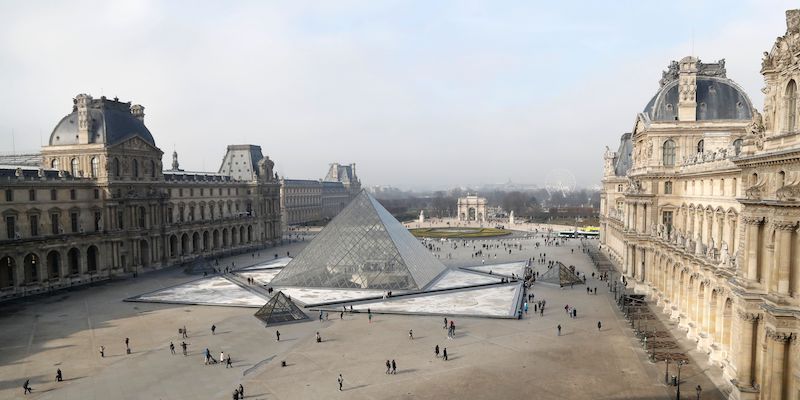
During the Renaissance, Paris was enriched with new palaces and monuments, such as the Louvre, which from a fortress became a royal residence.
In the 18th century, Paris was the center of the Enlightenment, the cultural movement that promoted reason and science, and the city was home to many philosophers and intellectuals, including Voltaire and Rousseau.
In 1789, the French Revolution that broke out in Paris marked a turning point in the history of the city and of France. The storming of the Bastille, on July 14, 1789, is one of the most famous events of the Revolution.
Under Napoleon Bonaparte, Paris experienced a period of great splendor and transformed into a European capital, and in the Belle Époque, at the end of the 19th century, Paris became the world capital of art and culture, attracting artists and intellectuals from all over the world.
During the two world wars the city suffered heavy damage, but managed to rise from its ashes and today, Paris is one of the most visited cities in the world, an economic, cultural and political center of primary importance. Curiosity
The name "Paris" comes from the name of the Parisii, a Celtic tribe that inhabited the region.
The Île de la Cité: It is the historical heart of Paris, where the Notre-Dame Cathedral stands.
The neighborhoods: Paris is divided into 20 arrondissements, each with its own identity and history. Paris AirportsParis is served by three main airports, each with its own characteristics and connections:
Paris Charles de Gaulle Airport (CDG):
It is the largest and busiest airport in Paris, an international hub that connects the French capital with destinations around the world. It is mainly used by scheduled airlines such as Air France and KLM.
Paris Orly Airport (ORY):
It is the second airport in Paris and focuses mainly on domestic flights and some European destinations. It is a good option for those traveling to closer destinations.
Beauvais-Tillé Airport (BVA):
It is located about 80 km north of Paris and is mainly used by low-cost airlines such as Ryanair and EasyJet. It is a cheap option to reach Paris, but requires longer travel times from the city center.
How to choose the right airport?
Choosing the right airport depends on several factors:
Destination: If you are traveling to an international destination, Charles de Gaulle is probably the best option. For domestic or European flights, Orly may be more convenient.
Airline: Some airlines operate exclusively from a specific airport.
Cost: Flights from Beauvais are generally cheaper, but consider the additional costs of getting to central Paris.
Comfort: Charles de Gaulle is the largest and offers a wide range of services, while Orly and Beauvais are generally smaller.
How to get to central Paris from the airports?
All three airports are well connected to central Paris by various means of transport:
Train: The RER train is the fastest and most convenient way to get to the city center from Charles de Gaulle and Orly.
Bus: Several bus lines connect the airports with the city.
Taxi: Taxis are available 24 hours a day, but are the most expensive option.
Private shuttles: Many companies offer private shuttle services from the airports to hotels.
Helpful Tips:
Book your transfer in advance: To avoid surprises and secure your seat, book your train, bus or private shuttle transfer in advance, especially during peak periods.
Check travel times: Consider the time it will take to get to your hotel from your chosen airport.
Check traffic conditions: During peak hours, traffic can be heavy, so plan accordingly.
I hope this information is helpful in planning your trip to Paris! |
Tickets
|